

Puzzle: Meaning, Types, Benefits, and Why People Love Solving Them
Introduction to Puzzles
A puzzle is a problem, game, or activity designed to test a person’s knowledge, logic, patience, or creativity. It requires careful thinking and problem solving rather than physical strength. Puzzles have existed for centuries and continue to be popular across cultures and age groups because they challenge the mind in enjoyable ways.
From simple picture puzzles for children to complex logic puzzles for adults, they serve both entertainment and educational purposes.
What Is a Puzzle
A puzzle is an activity in which pieces, clues, or patterns must be arranged correctly to reach a solution. The challenge may involve recognizing shapes, identifying words, solving numbers, or interpreting logical relationships.
Common features of puzzles include:
- A clear goal or solution
- Rules that guide how the solution can be reached
- Mental effort rather than physical effort
- A sense of satisfaction after completion
Puzzles can be solved individually or in groups, making them useful for both personal development and social interaction.
History of Puzzles
The earliest known puzzles appeared in ancient civilizations in the form of riddles and mathematical challenges. These were often used for education and intellectual training.
Important developments in puzzle history include:
- Ancient riddles used in Egypt, Greece, and India
- Tangram puzzles from China
- The first jigsaw puzzle created in the 18th century by John Spilsbury
- Crossword puzzles becoming popular in newspapers during the 20th century
- Digital puzzles emerging with the growth of computers and mobile devices
Today, puzzles exist in both physical and digital formats.
Types of Puzzles
There are many types of puzzles designed for different skill levels and interests.
Jigsaw Puzzles
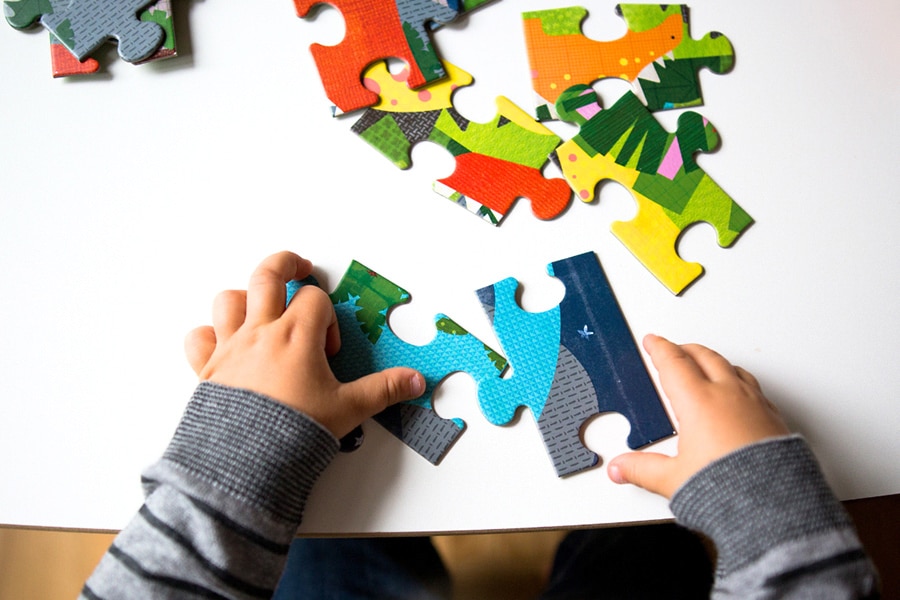
These puzzles involve assembling small pieces to form a complete image. They improve visual recognition and patience.
Crossword Puzzles
Players fill words into a grid based on clues. These puzzles strengthen vocabulary and language skills.
Sudoku
Sudoku is a number puzzle that requires placing digits correctly in a grid without repetition.
Logic Puzzles
These puzzles involve reasoning and deduction to reach a solution.
Mechanical Puzzles
Examples include cube puzzles and interlocking wooden structures that must be arranged correctly.
Word Puzzles
Word searches, anagrams, and letter rearrangement puzzles belong to this category.
Educational Importance of Puzzles
Puzzles are widely used in schools because they support learning in engaging ways.
They help students:
- Improve concentration
- Strengthen memory
- Develop reasoning ability
- Build vocabulary
- Enhance mathematical thinking
Teachers often include puzzles as classroom activities to make learning more interactive.
Benefits of Solving Puzzles
Solving puzzles regularly provides several mental and emotional advantages.
Improves Memory
Puzzles encourage the brain to recall patterns, shapes, and information.
Strengthens Problem Solving Skills
They train the mind to analyze situations carefully before making decisions.
Enhances Concentration
Completing puzzles requires focus and patience.
Reduces Stress
Puzzle solving can be relaxing and enjoyable.
Encourages Creativity
Some puzzles require imaginative thinking to find solutions.
Supports Brain Health
Regular mental activity helps maintain cognitive function.
Puzzles for Children and Adults
Different puzzles are designed for different age groups.
Children benefit from:
- Shape puzzles
- Alphabet puzzles
- Picture puzzles
Adults often prefer:
- Crossword puzzles
- Sudoku
- Strategy puzzles
- Mechanical puzzles
Selecting puzzles according to age improves effectiveness and enjoyment.
Digital Puzzles in the Modern World
Technology has changed how puzzles are created and solved.
Popular digital puzzle formats include:
- Mobile puzzle games
- Online crossword platforms
- Brain training applications
- Virtual escape room challenges
Digital puzzles provide convenience and accessibility anywhere and anytime.
How to Choose the Right Puzzle
Choosing the right puzzle depends on several factors.
Consider:
- Age group
- Skill level
- Interest area
- Time available
- Purpose such as education or recreation
A well chosen puzzle keeps the mind engaged without causing frustration.
Why Puzzles Remain Popular
Puzzles continue to attract people because they combine challenge with enjoyment. They are simple to start, rewarding to complete, and suitable for individuals or groups.
Their ability to improve thinking skills while providing entertainment ensures their lasting appeal.
FAQ Section
What is the main purpose of puzzles
The main purpose of puzzles is to challenge the brain, improve thinking ability, and provide entertainment.
Are puzzles good for mental health
Yes, puzzles support mental relaxation and help maintain cognitive activity.
At what age can children start solving puzzles
Children can begin with simple shape puzzles as early as two years old.
Do puzzles improve intelligence
Puzzles improve reasoning skills, concentration, and memory, which contribute to intellectual development.
How often should someone solve puzzles
Solving puzzles a few times each week can help maintain mental sharpness.
Can puzzles help improve academic performance
Yes, puzzles strengthen problem solving and analytical thinking skills useful in academic subjects.
Are digital puzzles as effective as traditional puzzles
Both digital and traditional puzzles provide mental benefits, though physical puzzles may offer stronger hands on engagement.