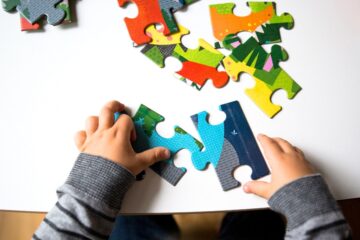

How Puzzles Improve Memory and Concentration

Introduction
Puzzles are more than simple entertainment activities. They actively engage the brain and help strengthen important mental abilities such as memory and concentration. Regular puzzle solving encourages deeper thinking, improves attention span, and supports long term cognitive development in both children and adults.
Because puzzles challenge the brain in structured ways, they are widely used in education, therapy, and personal development routines.
Understanding Memory and Concentration
Memory refers to the brain’s ability to store and recall information when needed. Concentration is the ability to focus attention on a specific task without distraction. Both skills are essential for academic success, workplace productivity, and everyday decision making.
When these abilities are trained regularly, the brain becomes more efficient at processing and organizing information.
How Puzzles Strengthen Memory
Solving puzzles activates different areas of the brain responsible for storing and retrieving information. This repeated mental activity strengthens neural connections.
Encouraging Pattern Recognition
Many puzzles require identifying shapes, numbers, or word patterns. Recognizing patterns helps the brain organize information more effectively, improving recall ability over time.
Improving Short Term Memory
Activities like matching puzzles and word searches require remembering positions, letters, or clues. These exercises strengthen short term memory capacity.
Supporting Long Term Memory Development
Frequent puzzle solving trains the brain to store information efficiently. Over time, this improves long term retention of knowledge and experiences.
Enhancing Visual Memory Skills
Jigsaw puzzles especially help individuals remember colors, shapes, and spatial arrangements. This improves visual memory accuracy.
How Puzzles Improve Concentration
Puzzles naturally demand attention and patience. Completing them successfully requires sustained focus on details and instructions.
Training the Brain to Stay Focused
While solving puzzles, distractions must be ignored. This strengthens the brain’s ability to maintain attention for longer periods.
Increasing Attention Span
Regular puzzle practice gradually improves the ability to stay engaged with tasks without losing interest.
Developing Logical Thinking
Logic puzzles require step by step reasoning. This encourages careful thinking and prevents impulsive decision making.
Improving Task Completion Skills
Finishing a puzzle teaches persistence and encourages individuals to complete what they start.
Role of Puzzles in Student Learning
Students benefit greatly from puzzle based learning techniques. Educational puzzles make lessons more engaging and interactive.
They help students:
- Remember classroom concepts more effectively
- Maintain attention during study sessions
- Improve vocabulary and mathematical reasoning
- Develop independent thinking habits
- Strengthen problem solving abilities
Teachers often include puzzle activities in classroom environments to improve learning outcomes.
Benefits for Adults and Older Individuals
Puzzle solving is equally valuable for adults. It keeps the brain active and supports mental clarity throughout life.
Adults who solve puzzles regularly often experience:
- Improved focus during daily tasks
- Better memory recall
- Reduced mental fatigue
- Increased patience and analytical ability
- Stronger decision making confidence
Mental exercises like puzzles are especially helpful in maintaining cognitive health with age.
Types of Puzzles That Improve Memory and Concentration
Different puzzles strengthen different mental skills.
Common effective puzzle types include:
- Jigsaw puzzles for visual memory improvement
- Crossword puzzles for vocabulary and recall development
- Sudoku puzzles for logical reasoning and number memory
- Word search puzzles for attention and pattern recognition
- Matching puzzles for short term memory training
Choosing a variety of puzzle types creates balanced brain development.
How Often Should You Solve Puzzles
Consistency is important for improving mental performance. Solving puzzles several times each week helps maintain cognitive strength.
Even short daily puzzle sessions can produce noticeable improvements in concentration and memory over time.
Why Puzzle Activities Are Effective Brain Exercises
Puzzles challenge the brain without causing stress. They combine entertainment with learning, making them ideal mental training tools.
Unlike passive activities, puzzles require active participation, decision making, and observation. This continuous engagement strengthens thinking abilities naturally.
FAQ Section
Can puzzles improve concentration in children quickly
Children often show improved concentration within a few weeks of regular puzzle practice.
Which puzzle type is best for improving memory
Matching puzzles, crossword puzzles, and jigsaw puzzles are especially effective for strengthening memory.
Are puzzles helpful for adults with busy schedules
Yes, even short puzzle sessions can improve focus and mental clarity in busy adults.
Do puzzles improve academic performance in students
Regular puzzle solving supports better attention, reasoning skills, and information retention, which helps academic learning.
Can solving puzzles daily improve brain health
Daily puzzle solving helps maintain cognitive activity and supports long term brain function.
Are digital puzzles as beneficial as physical puzzles
Digital puzzles provide similar mental benefits, though physical puzzles may improve hand eye coordination more effectively.
At what age should children start solving puzzles
Children can begin solving simple puzzles at an early age using shapes and picture based activities.